
Cliffside Park Directory Collections
Cliffside Park never had one complete, borough-only run of directories. The workable collection is regional and layered. Telephone directories, neighboring-city books, and newspapers each preserve a different piece of a household trail. So do local-history files, maps, and genealogy databases. Check the title page before trusting a Bergen, Northern New Jersey, or Hackensack volume as Cliffside Park coverage. Geographic scope matters. An apparent gap may simply be a missing year, a different place label, or a book that never included the borough at all.
| Collection | Years | Where Held | Access |
|---|---|---|---|
| Palisadian weekly | 1906 to 1926 | Library of Congress and Rutgers contributor records | Digitized scans, text, and PDFs |
| BCHS telephone directories | 1930-31 through 2018-19, with gaps | Bergen County Historical Society Library | Appointment access |
| Johnson city-directory runs | 1879; 1898-1902; 1906-1926; 1947-1956 | Johnson Public Library local history | Reference inquiry and in-person research |
| HeritageQuest | Current licensed database | BCCLS and New Jersey State Library route | Login required |
The gaps are part of the evidence. BCHS holds discontinuous regional telephone runs, and Johnson's named city-directory dates belong to Hackensack. Neither fact guarantees that every Cliffside Park address appears. Record the full title, year, publisher, page, and repository with each listing, because that small citation trail makes later comparison possible.
Cliffside Park City Directory Shelf Routes
The Bergen County Historical Society Library is the strongest regional history stop for this work. Its Ciarco Learning Center holdings include telephone directories, published genealogies, cemetery material, family files, vertical files, manuscripts, clippings, maps, photographs, and church or Bible records. It sits at 355 Main Street, Room 124, Hackensack, open Tuesdays 2-5 by appointment. Name Cliffside Park in any request. Add Palisade, Palisades, or Grantwood if the older place label applies. Include your date range. Say whether you need an address-arranged or alphabetical volume. The BCHS Library collection page is a sensible first stop before arranging a visit.
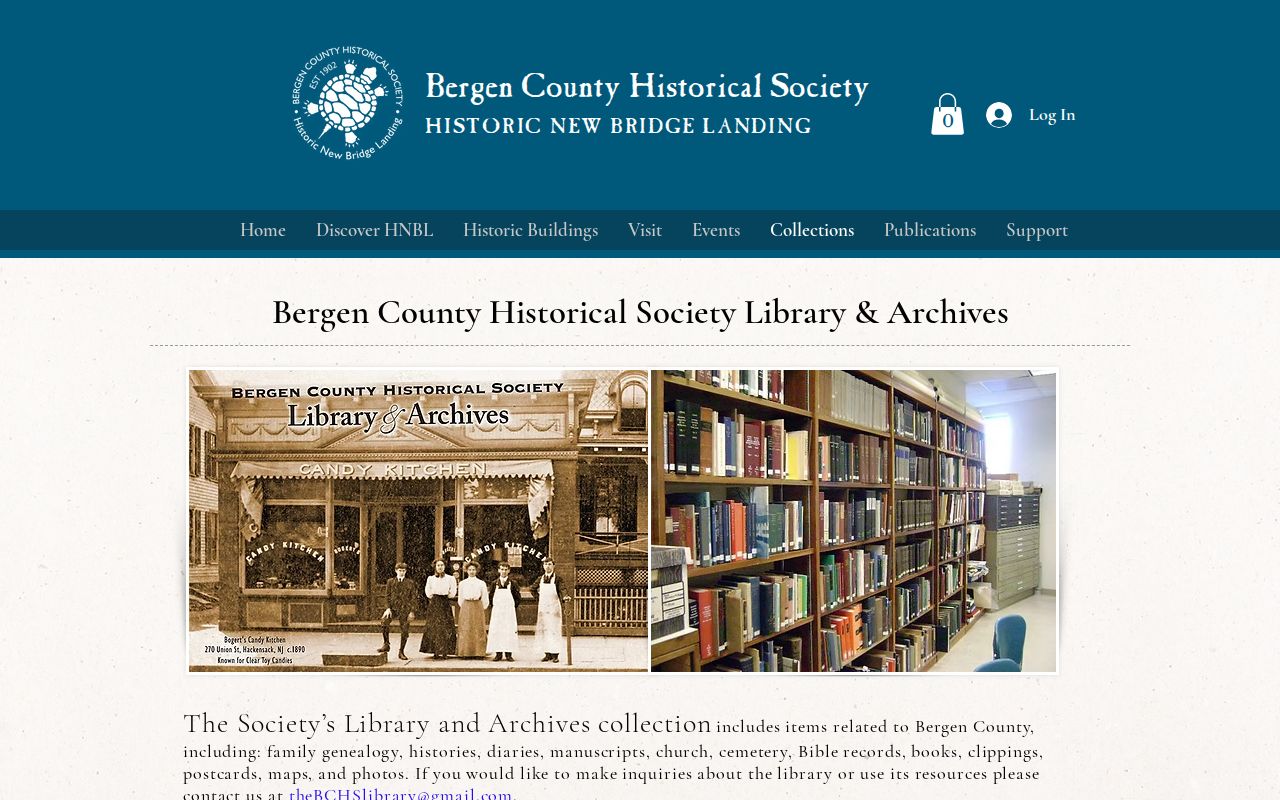
Its regional holdings can supply a telephone listing or a family-file lead. The volume itself remains the authority on whether a particular Cliffside Park name or street appears. For a smaller local first step, Cliffside Park Library lists its main location at 505 Palisade Avenue and a satellite at 742 Anderson Avenue. Call 201-945-2867 for an item-level catalog search, a local newspaper lead, a yearbook question, a vertical file, or an interlibrary-loan option. No shelf list confirms every historical directory held there. Get a catalog result or librarian confirmation before citing a specific volume. Some questions need a companion record rather than another directory. The New Jersey State Archives genealogy route covers births from 1848-1925, marriages and deaths from 1848-1950, delayed births, and the 1915 state census. The State Archives and BCHS are the proven paths for historic naturalization, cemetery, church, and family-file research. Bergen County Common Pleas naturalizations run from 1804-1906, with indexes for 1866-1906. Keep original and anglicized spellings side by side when comparing an old listing. Note: Save the call number, geographic scope, and copy rule with each directory request so later searches can be repeated accurately.
Cliffside Park Library Leads
Johnson Public Library Local History in Hackensack is the natural fallback whenever the Cliffside Park catalog cannot confirm an item. Its regional directory runs cover Hackensack in 1879, 1898-1902, 1906-1926, and 1947-1956, and some railroad-published volumes reach towns farther north along the rail line. The Reference Desk answers at 201-343-4781, the general number is 201-343-4169, and the local-history contact is help@johnsonlib.org. Search each book individually. Do not assume a run includes Cliffside Park.
The Cliffside Park Library location and contact page lists the local contacts for starting that item check.
A librarian can help tell an open web item from a licensed resource. HeritageQuest is one such resource. BCCLS routes it through its eSources page, and it requires a login. Johnson also holds the 1876 Walker Atlas, the 1983 Bergen County Historic Site Surveys, an industrial-directory run with gaps from 1901-1992, and a 1959-1981 record index. These materials add place or institution context. They are not a substitute for a household listing.
Reading Cliffside Park Directory Entries
Copy a historic Cliffside Park listing as a historical observation, nothing more. No official source publishes a named borough entry online. The Library of Congress format guidance and the BCHS collection descriptions do identify the fields worth recording. They tell you what to note once a volume is open. Preserve the spelling, initials, street number, title-page details, and abbreviation key exactly as printed. Resist the urge to expand. A business location does not prove where someone lived. Never infer an owner or renter mark. Use only what the volume actually prints.
| Printed name | Copy surname first, given name or initials, and any widow or widower notation exactly. |
|---|---|
| Household clue | Record a spouse or relationship only when the volume prints it, often in parentheses or a separate entry. |
| Street address | Capture the number, street spelling, directory year, and page because older naming may differ. |
| Telephone or occupation | Use a telephone exchange, business description, or occupation only as a period clue when shown. |
| Citation | Keep publisher, title, year, page, repository, and scan URL or call number together. |
- Criss-cross directory
- An address- or street-arranged section that may point from a location to a listed occupant. Not every volume has one.
- Householder index
- An alphabetical index of household heads or named residents, which can differ from a full address section.
- Abbreviation key
- The publisher's explanation of short forms, usually near the front of a volume. Photograph or note it before decoding entries.
Fields vary by publisher and year. A telephone directory may show only a name, address, and number, while a business or general directory may add an occupation or an employer address. Record only what the opened volume shows. Keep the citation with the transcription.
Cliffside Park Newspaper Directory Trail
The digitized Palisadian works well beside old Cliffside Park directory volumes. Dated issues give that work a firm anchor. Library of Congress metadata says the weekly began in 1906. Publication ran in Palisade, New Jersey, through May 1926. Each issue can surface legal notices, deaths, civic meetings, and street names. It can also carry announcements for a given week. No issue is a full resident list. Still, an issue and page number can show whether a family fits a particular period. It can also flag an address or street change from that time.
A 1926 Palisadian ordinance page renamed one Hillside Avenue segment. It ran between Edgewater Road and Greenmount Avenue. The borough called it Spring Street after that. A Cliffside Park historical-directory or newspaper lookup may miss a familiar modern address. So search both names. Two entries may describe the same place. That documented change is why the map, ordinance text, and directory date deserve a check. Treat two entries as different places only after that.
Note: Use a newspaper notice to fix a time and place, then confirm identity with the directory, map, deed, or vital record that fits the question.
Cliffside Park Directory Name Variants
Catalogs do not always use the modern borough name. Material from the 1890s through the 1920s may say Cliffside, Palisade Park, Palisade, Palisades, or Grantwood. The Library of Congress titles its 1911 Sanborn item for Palisades. Yet its secondary locations include Cliffside Park. This quirk matters when a modern-name search returns nothing. Try variants one at a time, then compare the date, street, and neighboring municipality each item names.
The 1911 Palisades Sanborn map set holds 75 sheets. Princeton's index points to Cliffside Park-related sheets 21, 30-42, 51, and 52-54. Sheets show a footprint, construction, use, and street setting. The maps do not name residents. Pair a sheet with a directory or newspaper entry instead of reading a mapped structure as a household record.
Tracing Cliffside Park City Directories
City directories work best when a household is traced across real publication years. One volume is never the whole answer. Start from a later known street number and surname. Then work backward through each available regional telephone or directory volume. Search the alphabetical name section and any address arrangement separately. A person may hide under initials, a spouse's name, a widow notation, or a business name. Note the page number too.
- Find the newest confirmed listing and copy its title, page, name spelling, address, and any printed household detail.
- Move backward through actual available years, logging gaps instead of filling them with estimates.
- Check an address-arranged or criss-cross section when the volume has one, then compare nearby listings cautiously.
- Pair a directory year with the federal census snapshots for 1900, 1910, 1920, 1930, 1940, and 1950, remembering later releases follow the 72-year access rule.
- Use a Sanborn sheet, Palisadian notice, deed index, death notice, probate filing, or cemetery record to test a move or disappearance.
A disappearance from a directory can mean several things. The household may have moved, a resident may have died, the street may have been omitted, the listing may sit under a different name, or the place name itself may vary. None of that is proof on its own. A modern record question belongs with the Cliffside Park resident lookup, while a current address chain belongs with the street directory.
Cliffside Park Directory Timeline
Cliffside Park's growth gives regional collections useful context. Official Bergen figures show 968 residents in 1900, 3,394 in 1910, 5,709 in 1920, and about 15,267 in 1930. A Census table reports 15,297 for that final year. Keep the small difference in your notes rather than forcing one number. The timeline that follows links municipal identity, local news, maps, and address terminology. No one source names every resident.
- 1895: local-history material records an 81-13 vote for the Cliffside Park or Palisade Park borough formation.
- 1906: the Palisadian began publication, creating a local notice trail.
- 1911: the Palisades Sanborn set mapped the developing built environment, including Cliffside Park sheets.
- 1926: the documented Hillside Avenue to Spring Street change created an address-search bridge.
A Cliffside Park family search often needs several catalog terms. It usually needs more than one collection too. These dated layers also let you state uncertainty plainly when a regional directory cannot verify a borough address.